
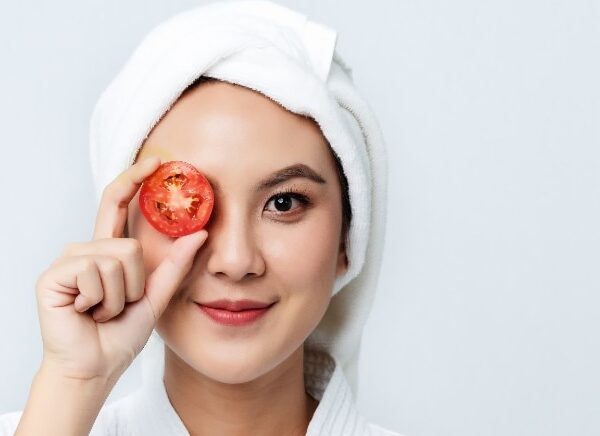
Tomatoes work on skin. The evidence is there — lycopene, Vitamin C, citric acid, and natural astringent compounds do measurable things when applied topically or consumed regularly. Here’s what each benefit actually involves, what’s realistically modest, and which skin types should stay well away.
Why Tomatoes Work: The Lycopene Factor
The reason tomatoes keep showing up in skincare conversations is lycopene — a carotenoid that gives tomatoes their red color and functions as one of the most potent dietary antioxidants in any common food. Skin benefits come from both topical application and regular consumption.
A study published in the British Journal of Dermatology found that participants who consumed 40 grams of tomato paste daily for 10 weeks had 33% more protection against UV-induced skin redness compared to a control group. That is documented and reproducible. It is also not sunscreen-level protection, so keep that in perspective.
Benefit 1: Antioxidant Defense Against Free Radicals
Free radicals from pollution, UV exposure, and chronic stress break down collagen fibers over time. Lycopene neutralizes them before structural damage compounds. One medium Roma tomato contains approximately 3.2mg of lycopene — higher per gram than watermelon or pink grapefruit, and concentrated enough to register at the skin surface when applied topically.
Applied directly, lycopene doesn’t penetrate as deeply as a dedicated antioxidant serum would. But the first-line surface protection is real and worth having as part of a broader routine.
Benefit 2: Mild UV Damage Buffer
Tomatoes do not replace sunscreen. Say that plainly. Lycopene and beta-carotene do provide a low-level buffer against UV-induced oxidative stress when consumed consistently over weeks — the British Journal study confirmed this. Topically, they may reduce the inflammatory response after sun exposure. They do not block photons.
If you are rubbing tomato on your face as your UV protection strategy, that is a mistake with real consequences. It is supplemental antioxidant support, nothing more. Your SPF 50 stays on.
Benefit 3: Vitamin C and Collagen Synthesis
One medium tomato delivers roughly 28% of daily Vitamin C intake. Applied to skin, Vitamin C is a proven collagen co-factor — skin needs it to synthesize collagen fibers. The concentration in tomato juice won’t match a calibrated product like the Timeless Skin Care 20% Vitamin C + E Ferulic Acid Serum ($25 for 30ml), which delivers stabilized L-ascorbic acid at a clinical dose. But it adds meaningful supplementary Vitamin C both dietarily and topically.
The acidic environment in tomato juice also keeps topical Vitamin C more stable on skin than some water-based DIY applications — a minor but real advantage.
All 10 Skin Benefits: Effectiveness Rated Honestly
Before going deeper into application methods, here is the complete picture. Not all benefits are equal. The table below uses honest ratings rather than uniform enthusiasm.
| Benefit | Active Compound | Effectiveness | Best Method |
|---|---|---|---|
| 1. Free radical protection | Lycopene | Strong | Topical + dietary |
| 2. UV damage buffer | Lycopene, beta-carotene | Moderate (dietary only) | Dietary |
| 3. Skin brightening | Vitamin C, citric acid | Moderate | Topical |
| 4. Dark spot fading | Vitamin C, AHAs | Mild to moderate | Topical, consistent use |
| 5. Oil control | Astringent compounds, acid pH | Moderate | Topical |
| 6. Acne reduction | Citric acid, trace salicylates | Mild | Topical |
| 7. Anti-aging support | Lycopene, Vitamin C | Mild to moderate | Dietary + topical |
| 8. Collagen support | Vitamin C | Moderate | Dietary + topical |
| 9. Pore appearance | Astringent compounds | Mild, temporary | Topical mask |
| 10. Surface hydration | Water content (94%), potassium | Mild | Topical |
The strongest and most reliable results come from benefits 1, 3, and 5. Oily and combination skin types consistently see the best results. Dry skin types need to approach with real caution — the acid content strips moisture rather than adds it, which flips the equation entirely.
How Tomatoes Brighten Skin and Fade Dark Spots
Benefits 3 and 4 are where most people notice visible change first. Tomatoes sit at pH 4.0–4.5 — right in the effective range for mild chemical exfoliation. That, combined with Vitamin C content, creates a dual-action brightening effect that accumulates with consistent use.
The Mechanism Behind It
Citric acid in tomatoes inhibits melanin production by interfering with tyrosinase — the same enzyme pathway targeted by alpha arbutin and kojic acid. The effect is slower and gentler than a dedicated brightening product like The Ordinary Alpha Arbutin 2% + HA (around $8 for 30ml), but it is cumulative and low-irritation enough for regular use on most skin types.
For stubborn post-inflammatory hyperpigmentation or melasma, tomatoes alone won’t deliver. Something like Murad Rapid Dark Spot Correcting Serum ($82, formulated with tranexamic acid and glycolic acid) will outperform raw tomato significantly. Tomato is a maintenance brightener for mild, diffuse uneven tone — not a clinical dark spot solution.
A Practical 4-Step Application Method
- Choose Roma or beefsteak tomatoes. They have higher lycopene concentration and lower water content than cherry varieties, meaning more active compounds per application.
- Slice and rub the cut face directly over clean, dry skin for 60 to 90 seconds. You are depositing juice and pulp at the skin surface.
- Leave it for 10 minutes maximum. Not longer. Citric acid becomes irritating at extended contact, especially around the eyes and corners of the mouth.
- Rinse with cool water and moisturize immediately. Never skip this step — the acid mildly disrupts the skin barrier and that disruption needs to be addressed right away.
Three times per week is the right frequency. Allow 6 to 8 weeks before assessing results. Any topical brightening treatment — including expensive serums — requires that kind of timeline to show measurable change.
Acne, Oil Control, and Pores: Straight Answers
Does Tomato Actually Help with Acne?
Mildly, and only for specific kinds. Tomato juice contains citric acid with real antibacterial properties and trace amounts of salicylate-adjacent compounds. For mild, surface-level breakouts tied to oil and debris buildup, a 10-minute tomato application 2 to 3 times per week can contribute to clearer skin. For moderate to severe acne, it does nothing clinically meaningful. Benzoyl peroxide, adapalene, and prescription-grade treatments exist because acne is a medical condition that needs proportionate tools.
Tomato works for oily, mildly acne-prone skin as a maintenance measure. Not as treatment.
Why Does It Reduce Oiliness?
Two mechanisms run simultaneously. The astringent compounds in tomato pulp temporarily tighten pores and reduce visible sebum at the surface. And the low pH brings oily skin — which tends to run slightly alkaline at the surface — back toward a healthier acid mantle balance. The combined effect produces a real, observable reduction in shine and oiliness.
It resets within hours. Useful on high-humidity days or before events. Not a permanent sebum management strategy.
Can It Minimize Pores?
Temporarily. Permanently, no — nothing applied topically changes pore size structurally. The astringent effect tightens skin around pores for a few hours, making them appear smaller. The same mechanism as a clay mask or a cold-water rinse. Real effect, cosmetic in nature, and short-lived.
Anti-Aging Expectations: Keep Them Grounded
Lycopene and Vitamin C both support collagen — that is true and documented. But tomatoes are a supplementary habit, not a replacement for proven anti-aging actives. A calibrated retinaldehyde or high-concentration peptide serum will outperform raw tomato for wrinkle reduction every time. Use tomatoes alongside your retinol routine, not instead of it. That combination makes sense. Choosing between them does not.
Formulated Tomato Skincare Products That Are Worth It
DIY application works, but stabilized formulations deliver more consistent, predictable results. When tomato extract is processed into a properly pH-balanced base, absorption improves, irritation risk drops, and dosing stays consistent — none of which you get from dragging a tomato slice across your face.
Biotique Bio Tomato Splash SPF 16 Moisturizer
Roughly $10–12 for 120ml. Tomato extract paired with SPF 16 — not sufficient sun protection for outdoor use as your sole defense, but a genuinely lightweight daily moisturizer for oily to combination skin. The texture is non-greasy and fast-absorbing, which makes it practical in humid climates where heavier moisturizers feel oppressive. Layer a dedicated SPF 30+ on top for actual sun protection days.
Mamaearth Vitamin C Daily Glow Cream
Around $9 for 80g. Uses tomato-derived lycopene alongside Vitamin C and turmeric. Not a clinical brightening treatment — but a reliable, affordable daily maintenance option. Particularly effective for South and Southeast Asian skin tones dealing with mild dullness and residual post-acne marks. At that price, it earns its place in a routine without much debate.
Kama Ayurveda Kumkumadi Miraculous Beauty Fluid
$52 for 12ml. That price demands an explanation, and the formula delivers one. This Ayurvedic preparation combines tomato alongside saffron and sandalwood extract in a cold-pressed carrier oil base. Brightening results appear at 8 to 12 weeks of consistent use and are genuinely noticeable. More importantly, unlike most tomato-forward products that work for oily skin, the oil-based carrier here prevents the stripping effect that raw tomato causes — making this the right recommendation for dry to normal skin types who want lycopene benefits without the acid drawback.
Oily skin: Biotique. Dry skin: Kama Ayurveda. Budget-first: Mamaearth. Those three cover the main use cases without overlap.
When to Skip Tomatoes and Use Something Else
Tomatoes cause real damage on the wrong skin types. The same acidity that benefits oily skin disrupts dry, sensitized, or barrier-compromised skin. This is not a mild caution — for several skin conditions, tomatoes actively make things worse.
Conditions That Rule Out Raw Tomato Application
- Rosacea or eczema — citric acid aggravates redness and disrupts an already-compromised skin barrier. Use ceramide-focused products instead: CeraVe Moisturizing Cream or Aveeno Calm + Restore Oat Gel Moisturizer are the right tools, not anything acidic.
- Active breakouts with open or broken skin — acidic juice on open skin stings and creates a pathway for bacterial spread. A targeted benzoyl peroxide spot treatment is the correct choice.
- Severely dry or dehydrated skin — the astringent effect strips residual surface moisture, leaving skin more dehydrated than when you started.
- Freshly retinol-treated or exfoliated skin — stacking citric acid on top of already-sensitized skin creates real barrier damage. Give at least 24 hours between active ingredients.
- Latex-fruit syndrome — some people with latex allergies also react to tomato proteins. Patch test any new topical ingredient, including natural ones. The back of the jaw is a reliable test site.
Common Mistakes That Make Tomato Work Against You
- Leaving it on overnight — extended acid contact irritates even tolerant skin over time
- Skipping moisturizer after rinsing — the barrier disruption from acid requires immediate follow-up hydration
- Using it as SPF — it is not, under any interpretation of the science
- Applying it to freshly waxed or dermaplaned skin — open follicles plus acid is too aggressive a combination
- Judging results after a week — brightening from any topical treatment takes 6 to 8 weeks of consistent application to register visibly
If your skin leans dry, sensitized, or reactive, skip the tomato entirely. The Inkey List Niacinamide Serum ($11 for 30ml) gives you oil control, brightening, and barrier support with none of the acid risk. For most skin types that think they want tomato skincare, niacinamide is actually the smarter match.