The biggest misconception in men’s dressing is that looking polished requires either expensive clothes or formal ones. Neither is accurate. Elegance in casual contexts comes from three things: how well the clothes fit the body, how well the fabrics behave under movement and light, and how restrained the overall visual composition is. None of these cost more than knowing what to look for.
What “Casual Elegant” Actually Means
The term gets applied so loosely it becomes nearly meaningless. Some men interpret it as “business casual with a better watch.” Others think it means buying neutral-toned luxury basics and hoping they add up to something. Both readings miss the core idea.
Casual elegant is an outfit that reads as deliberate without reading as formal. The person wearing it has clearly made specific choices — but those choices don’t involve a tie, dress trousers, or anything that signals a professional obligation. The formality ceiling is low. The visual intentionality is high. That gap between low formality and high intentionality is exactly where the aesthetic lives.
The context where this matters most is the grey zone most adult men navigate constantly: a dinner that’s not quite a restaurant, a coffee meeting slightly more important than casual, a weekend gathering where business casual feels overcalibrated but jeans feel underprepared. These situations come up constantly. Casual elegant is the vocabulary for answering them correctly without rethinking the solution every single time.
The Three Signals That Register as Elegant
Strip away every brand name, price point, and seasonal trend, and elegance communicates through three variables only.
Fit that follows proportion. Not body-con tight, not deliberately oversized — proportional to the frame. Shirts that don’t balloon at the torso when the arms hang naturally. Trousers that taper toward the ankle. Jackets with shoulder seams landing at the exact outer edge of the shoulder, not drooping toward the upper arm.
Fabric behavior. How a fabric holds shape, drapes under movement, and reflects light communicates quality at a level below conscious processing. Linen drapes and develops natural texture. Merino holds structure without heaviness. Polyester gathers, bags at the seat, and reflects light in ways that communicate cheap regardless of the price tag attached to it.
A contained color palette. Two or three colors in any visible combination, no logos competing for attention, and clean surfaces that let the shape of the garment read clearly. The specific colors matter far less than the count.
Why Expensive Clothes Don’t Solve This Automatically
Men invest heavily in luxury knitwear, premium leather goods, or high-end basics — then wear those pieces with ill-fitting jeans and chunky athletic sneakers. The result reads no more elegant than an outfit assembled from mid-range basics with better fit decisions. Money bought better raw materials. The formula is still absent.
The reverse is equally true. A $45 tapered chino in navy, a $29 Oxford-cloth button-down, and a $120 pair of leather loafers is a complete, genuinely elegant casual outfit — because the fit is proportional, the fabrics behave, and the palette is contained. Casual elegant is not a budget problem. It is a knowledge problem, and knowledge doesn’t scale with spend.
Casual vs. Casual Elegant — The Real Differences
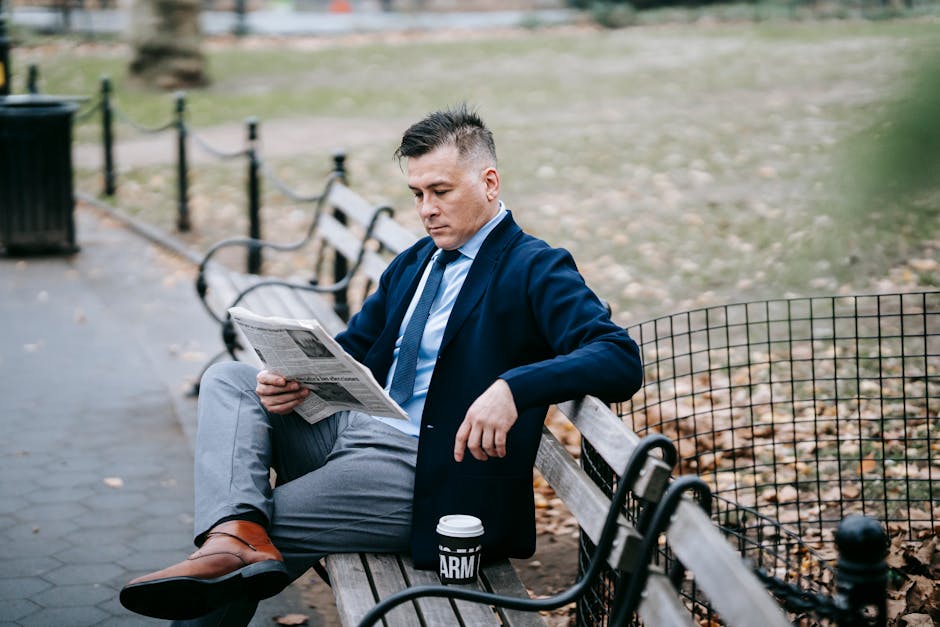
Looking at the same outfit categories side by side reveals that the gap isn’t about garment type — it’s about execution at every decision point within the same category.
| Outfit Element | Standard Casual | Casual Elegant |
|---|---|---|
| Trousers | Relaxed jeans, standard-fit chinos, cargo pants | Tapered chino or slim straight denim with a clean, minimal hem |
| Top | Graphic tee, branded hoodie, oversized polo | Linen button-down, fine-gauge crewneck, plain well-fitted t-shirt |
| Shoes | Athletic sneakers, thick-soled trainers, slides | Leather loafers, Chelsea boots, minimalist leather sneakers |
| Outerwear | Zip-up fleece, branded puffer, athletic jacket | Unstructured linen or cotton blazer, wool-blend overshirt |
| Visible colors | 4–6, including logos, graphics, and contrast stitching | 2–3, no visible branding, clean surfaces throughout |
| Fit standard | Relaxed or intentionally oversized throughout | Follows body proportions — slim at shoulder, tapered toward ankle |
| Approx. cost per outfit | $80–$150 | $130–$280 — not more, just allocated differently |
The shoes row carries more weight than any other in this comparison. Athletic sneakers communicate “I’m not thinking about this outfit.” Leather loafers or clean Chelsea boots communicate the opposite — and they work under almost every combination in the right column. The signal difference is vastly disproportionate to the effort difference.
The color row is equally significant. Every additional visible logo, graphic, or contrast element adds visual noise. The casual elegant aesthetic is a low-noise system. Not boring — controlled. The goal is to direct attention to proportion and silhouette, not to individual items competing for attention.
The cost gap between the two columns is also smaller than most men expect. Casual elegant doesn’t require spending more overall — it requires allocating the same budget toward fit-quality pieces rather than branded statement items.
The Five Pieces That Cover Most Outfit Combinations
A complete casual elegant rotation doesn’t need 40 pieces. Five anchor items create roughly 15 workable outfit combinations when cycled with what’s already in most wardrobes. Here is the exact list with brands, prices, and fit notes for each.
- A tapered chino in navy, stone, or khaki. The Uniqlo Slim-Fit Chino ($40) is the reference at entry price — cotton-twill construction, shape-stable through a full day, available in the right neutral tones. J.Crew’s 484 Slim-Fit Chino ($75) is the step up: heavier fabric, better drape in colder months. Fit target: slim through the thigh, taper starting above the knee, hem breaking just at the shoe or a quarter-inch above.
- A linen or Oxford-cloth button-down in white or light blue. Arket’s Relaxed Linen Shirt (~$80) hits the correct register — relaxed enough to wear comfortably untucked, structured enough to layer under a blazer without collapsing. Under $35, the Uniqlo Premium Linen Long-Sleeve Shirt performs nearly as well. Avoid wrinkle-resistant treated fabrics — the surface treatment makes them reflect light flatly and feel stiff against the body.
- Leather loafers or Chelsea boots. This is where spending slightly more generates the highest return per dollar. Thursday Boot Company’s Diplomat Chelsea (~$200) and Maguire’s Varda Loafer (~$180) are both accessible and built to last 6–8 years with basic maintenance. Common Projects’ loafers ($450) are the aspirational option — excellent construction, but Thursday Boot Company closes roughly 80% of that gap at half the price.
- An unstructured blazer in linen or light cotton. The COS Unstructured Linen Blazer (~$160) is the mid-range standard: works across seasons, travels without structural wrinkling, and layers over a plain t-shirt as naturally as over a dress shirt. The critical spec is unstructured — any shoulder padding or canvas interlining pushes the garment toward formal territory, which breaks the casual register entirely.
- A Merino crewneck sweater in off-white, navy, or mid-grey. Uniqlo’s Extra Fine Merino Crewneck ($50) has held its reference status in this category for years — fine-gauge knit, shape-stable after multiple washes, exactly the right weight for layering. Worn over an Oxford cloth button-down with the collar showing, this single piece upgrades the outfit tier more than almost anything else on this list relative to what it costs.
Buying all five at mid-range prices lands around $550 total. That’s a foundation covering most social situations outside formal events, based on a rotating combination system rather than a one-outfit-per-occasion approach.
Fit and Fabric: The Two Variables That Override Everything Else
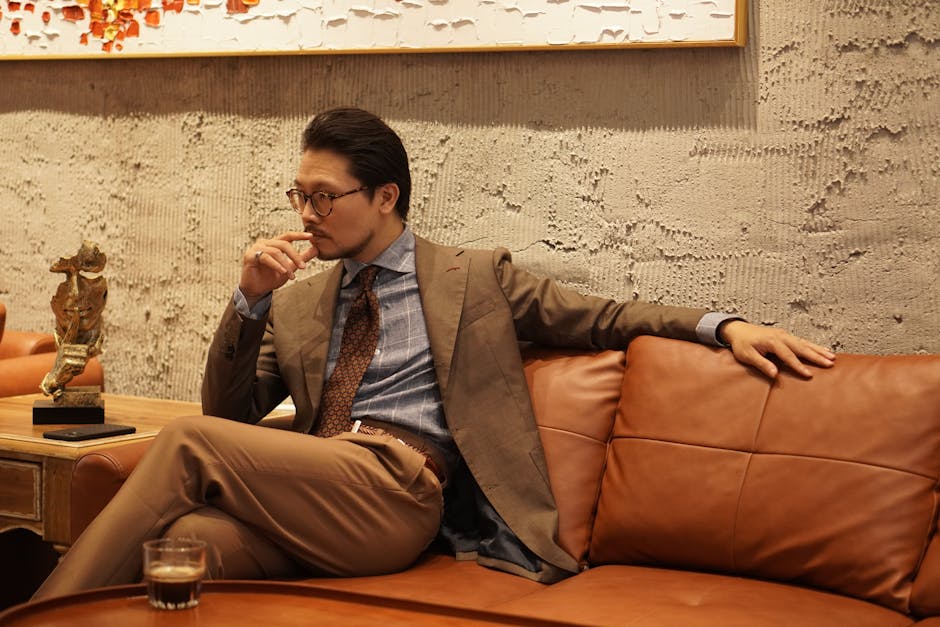
Every other factor in men’s dressing — color theory, seasonal trends, brand hierarchies — is secondary to these two. A man who understands fit and fabric can build a casual elegant outfit from nearly any retailer at almost any price point. A man who doesn’t will spend inconsistently and get inconsistent results regardless of budget.
Fit Standards by Garment Type
Saying “wear clothes that fit” solves nothing. Here are the specific checkpoints to apply at every purchase decision:
Shirts and button-downs: The shoulder seam sits at the outer edge of the shoulder — not drooping down the arm, not riding toward the neck. That seam is the single most visible fit indicator at a glance and the hardest to alter cheaply post-purchase. The body is slim enough that fabric doesn’t balloon when arms hang naturally, but doesn’t pull across the chest when you reach forward. Worn untucked, the hem should hit mid-fly — if it reaches the middle of the thigh, size down.
Trousers and chinos: The waistband sits flat without needing a belt for structural support. The thigh has room to move without visible bagging. Taper starts at or just above the knee, not abruptly at the ankle. Hem break: clean, slight, or none — all read correctly. Heavy fabric stacking at the shoe is the most common single failure point for men buying trousers online.
Blazers: The shoulder seam rule becomes even more critical here. Half an inch off in either direction and the jacket reads like a borrowed item, regardless of what brand made it. The chest button closes without pulling the lapel. Sleeve length: between a quarter and half inch of shirt cuff visible when standing with arms at rest.
Off-the-rack alterations are fast and cheap. A hem costs $15–$20. Slight waist suppression on a shirt costs $20–$25. A tailor shortening jacket sleeves runs $30–$40. A $70 chino that fits after a $20 hem beats a $200 chino left unadjusted every time.
Four Fabrics Worth Prioritizing
Linen develops structure and texture simultaneously. The wrinkle is an asset, not a flaw — it reads as intentional texture and signals natural fiber. Best for shirts, lightweight trousers, and blazers in warm months. It improves with wear rather than degrading.
Merino wool in fine gauge resists pilling, regulates temperature across a wider range than cotton, and drapes without clinging. It communicates quality at a sensory level that synthetic alternatives cannot match. Uniqlo’s Extra Fine Merino range at $50–$60 performs like fabric costing three times more in terms of shape retention after washing.
Cotton twill — the base of a good chino — holds its shape through extended wear, responds to minimal ironing, and ages without obvious visual degradation. Compare a cotton-twill chino against a polyester-blend chino after four hours of movement. The structural difference is immediately visible.
Full-grain leather on shoes develops a patina over years that synthetic materials cannot replicate. Thursday Boot Company’s Diplomat Chelsea in mid-brown starts well and improves over two to three years of regular wear. Entry-level PU leather shoes look worse at month four than they did on day one. The longevity math alone justifies the price difference for footwear specifically.
On the avoid list without exception: polyester-blend dress shirts, acrylic marketed as wool knitwear, and faux-suede footwear. These materials communicate cheapness at a level that good fit alone cannot fully compensate for.
The One Move That Collapses an Otherwise Good Outfit
Including a single piece that speaks a different visual language and assuming it won’t matter. It always matters. Athletic sneakers under tapered chinos and a linen blazer read as a mistake, not deliberate contrast. A graphic hoodie under an unstructured jacket does exactly the same thing. Casual elegant is a coherent system — every piece must signal the same level of intentionality, or the whole outfit reads as unfinished rather than effortless.
Every piece in a casual elegant outfit must speak the same visual language — and the moment one doesn’t, the whole system fails.