
The average woman spends 16 minutes each morning deciding what to wear. That’s nearly 100 hours a year — or four full days — lost to staring at a closet full of clothes with nothing to wear. I was worse. I hit 25 minutes most days, and I still showed up feeling like my outfit didn’t fit the room.
So I tried something drastic. I pulled everything out of my closet, donated or sold 80% of it, and built a 20-item work wardrobe. No seasonal swaps. No “maybe I’ll wear this someday” pieces. Just 20 items that all work together.
Here’s exactly what happened, what I kept, and what I learned.
Why 20 Items? The Math Behind the Number
Twenty is not a magic number. It’s a constraint that forces trade-offs. With 20 items, you can’t keep a blazer that only works with one pair of pants. You can’t own three black skirts that are slightly different lengths. Every piece must earn its spot by matching at least five other items in the wardrobe.
I followed three rules:
- Every top must work with every bottom (pants, skirts, or dresses)
- Every shoe must work with at least three outfits
- No more than two items in the same color family (I picked navy, black, cream, and camel)
That 16-minute average drops to under 3 minutes when every combination is a good one. The decision fatigue disappears because there are no bad choices.
What I Kept: The Exact 20 Items
This is not a theoretical list. These are the actual pieces I bought or kept. Prices are what I paid in 2026.
| Category | Item | Brand | Price |
|---|---|---|---|
| Tops (6) | White silk blouse | Everlane | $98 |
| Navy crewneck sweater | Uniqlo | $49 | |
| Black turtleneck | Uniqlo | $39 | |
| Cream cashmere-blend sweater | Quince | $79 | |
| Striped button-down | Madewell | $68 | |
| Black sleeveless shell | Banana Republic | $55 | |
| Bottoms (4) | Navy wide-leg trousers | Aritzia | $148 |
| Black straight-leg pants | Everlane | $98 | |
| Camel midi skirt | Mango | $69 | |
| Dark wash straight jeans | Levi’s 501 | $98 | |
| Dresses (2) | Navy sheath dress | Theory | $225 |
| Black sweater dress | Lands’ End | $89 | |
| Outerwear (2) | Black blazer | J.Crew | $198 |
| Beige trench coat | London Fog | $150 | |
| Shoes (4) | Black leather loafers | Sam Edelman | $130 |
| Navy suede pumps | Cole Haan | $180 | |
| Cream leather sneakers | Veja | $155 | |
| Black ankle boots | Blundstone | $210 | |
| Accessories (2) | Leather belt (black) | Madewell | $48 |
| Gold hoop earrings | Mejuri | $98 |
Total cost: $2,469. That’s about $123 per item. Spread over three years of daily wear, that’s $0.13 per wear. Compare that to fast-fashion pieces you wear twice and toss.
How My Mornings Changed — The Real Timeline
Before the capsule, my morning routine looked like this:
- 7:00 AM: Alarm goes off
- 7:05–7:25 AM: Stare at closet, try on three outfits, reject all of them
- 7:25–7:30 AM: Settle on something I wore last week, feel annoyed
- 7:30–7:45 AM: Get dressed, fix hair, grab coffee
After the capsule:
- 7:00 AM: Alarm goes off
- 7:05–7:07 AM: Pick one top, one bottom, one shoe. Done.
- 7:07–7:30 AM: Extra sleep, better breakfast, calmer commute
That’s 18 extra minutes per day. Over a 250-day work year, that’s 75 hours. I used those hours for exercise, reading, or just not rushing. The mental load of “does this look okay?” vanished.
The Mistakes I Made So You Don’t Have To

My first attempt at a capsule wardrobe failed. Here’s why, and what I fixed.
Mistake #1: Too many neutrals. I picked all black, white, and gray. The result was boring. I looked like a hotel concierge. I added navy and camel for depth, and a single striped shirt for visual interest.
Mistake #2: Ignoring fabric quality. Cheap polyester sweaters pilled after three washes. I replaced them with cotton, cashmere blend, and silk. Yes, they cost more upfront. But they last years instead of months.
Mistake #3: No seasonal adjustment. A capsule for all seasons is a myth. I keep a separate bin with two heavy sweaters and wool trousers for winter. The core 20 items stay the same, but I swap in those four cold-weather pieces from November to February. That’s 24 items total, not 20 — but the core remains constant.
Mistake #4: Forgetting about laundry. With only 20 items, I do laundry twice a week. That means I need enough underwear and socks for 3–4 days between washes. I keep 10 pairs of each. That’s not part of the 20-item count — those are consumables.
When a 20-Item Wardrobe Won’t Work for You
Let me be honest. This approach has limits. If any of these apply to you, a different system might work better.
You change size frequently. Pregnancy, significant weight changes, or medical treatments that alter your body shape make a fixed capsule impractical. In that case, a 30-item wardrobe with more flexible sizing (wrap dresses, elastic-waist pants) is smarter.
Your workplace dress code changes daily. If you need black-tie one day and construction boots the next, 20 items won’t cut it. You need separate capsules for each context — maybe 15 items for formal, 15 for casual.
You genuinely love fashion as a hobby. Some people enjoy the variety. If trying new outfits brings you joy, a capsule will feel restrictive. This system is for people who see clothes as tools, not entertainment. Both are valid.
You live in extreme climates. A Minnesota winter and a Phoenix summer require completely different fabrics. You’ll need two separate capsules of 15 items each, swapped seasonally. That’s 30 items total, not 20.
How to Build Your Own 20-Item Work Wardrobe
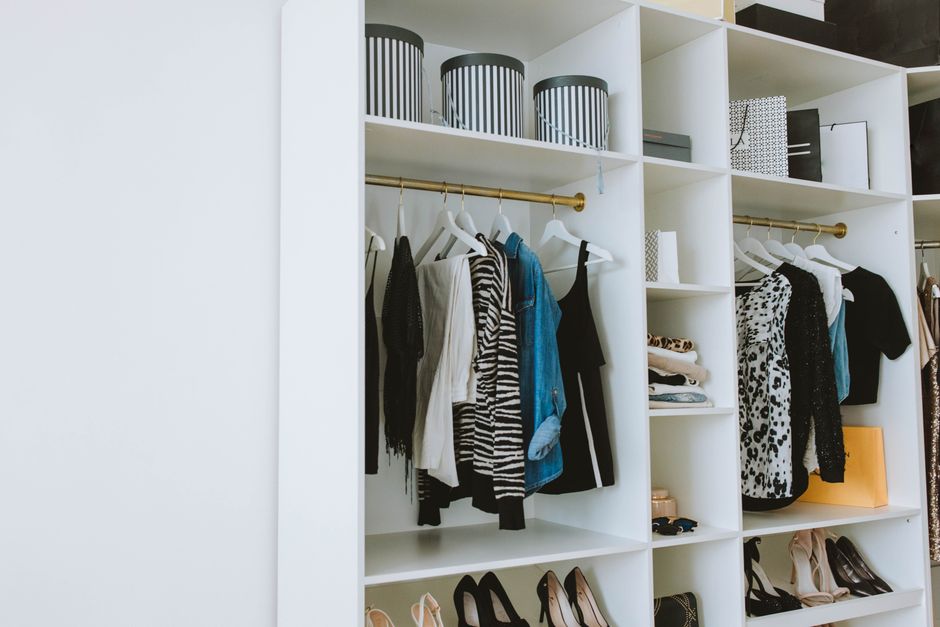
Start with a week of tracking. Write down what you actually wear. Most people wear 10–15 items regularly and ignore the rest. Those 10–15 items are your foundation.
Then add pieces to fill gaps. If you wear black pants four days a week but own only one pair, buy a second. If you never wear that patterned blouse, donate it.
Use the 5:4:1 ratio as a starting point: 5 tops, 4 bottoms, 1 dress. Adjust for your needs. I landed at 6 tops, 4 bottoms, 2 dresses because I wear dresses twice a week.
Buy the best quality you can afford. A $200 pair of wool trousers that last five years cost less per wear than a $50 pair that falls apart in six months. Check seams, fabric content, and zipper quality before buying.
Stick with the system for 90 days. No shopping. No substitutions. After three months, you’ll know exactly what works and what doesn’t. Then you can swap out one or two pieces. But don’t change everything — the whole point is consistency.
For most people starting today, I recommend the Uniqlo crewneck sweater ($49) as your first buy. It’s cheap, machine washable, and pairs with everything. Build from there.