
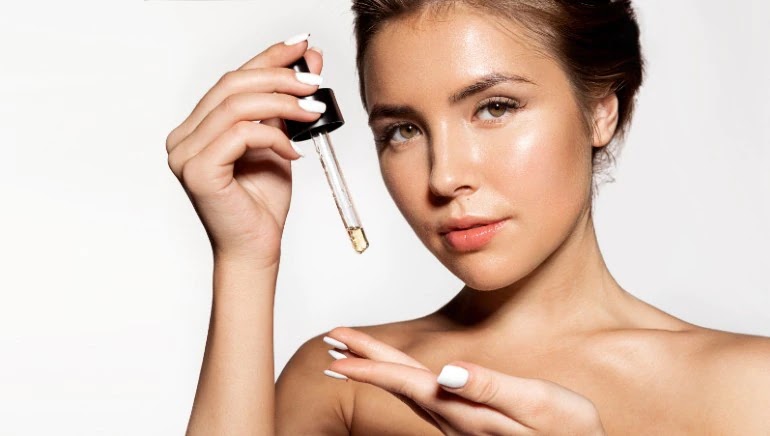
Surveys of skincare consumers consistently suggest that more than half of people who own both a face serum and a facial oil apply them in the wrong order — an error that dermatologists have generally found reduces how much active ingredient the skin absorbs. The two products look nearly identical on a bathroom shelf. Small bottles. Dropper caps. High price tags. But they function through completely different mechanisms, and treating them as interchangeable typically undermines both.
Understanding the actual difference is not complicated. It does, however, require setting aside the language on most product labels — which tends to describe benefits rather than mechanisms.
This is not medical advice — consult a licensed dermatologist for personalized skin concerns.
What’s Actually in Each Bottle: Serum vs. Oil Compared
Serums are water-based (occasionally alcohol-based) formulations concentrated with active ingredients. The defining characteristic isn’t the texture — it’s the molecule size. Serum actives are engineered small enough to cross the outermost layers of the stratum corneum and deliver a measurable result: reduced pigmentation from vitamin C, improved hydration from hyaluronic acid, reduced pore appearance from niacinamide.
Facial oils are lipid-based. Most of them don’t penetrate the skin the way a serum does. They occupy the outermost lipid layer — filling gaps between skin cells, slowing moisture loss through the skin surface, and reinforcing the barrier’s natural structure. Some lightweight oils, particularly squalane, do absorb more readily than others. But the primary job of most facial oils is barrier support and occlusion, not active ingredient delivery.
The table below captures the functional difference:
| Feature | Face Serum | Facial Oil |
|---|---|---|
| Base | Water or water-alcohol | Lipid (plant oils, squalane, esters) |
| Molecule size | Small — penetrates epidermis | Larger — stays in lipid barrier layer |
| Primary purpose | Deliver concentrated actives | Seal moisture, support skin barrier |
| Key ingredients | Vitamin C, niacinamide, hyaluronic acid, retinol, AHAs, peptides | Rosehip, squalane, jojoba, marula, argan, sea buckthorn |
| Best suited for | All skin types | Dry, normal, mature — use with caution on acne-prone skin |
| When to apply | After toner, before moisturizer | Final PM step — generally skip before SPF in the AM |
| Real product examples | The Ordinary Hyaluronic Acid 2% + B5 ($8), SkinCeuticals C E Ferulic ($182), Paula’s Choice 10% Niacinamide Booster ($44) | Drunk Elephant Virgin Marula Luxury Facial Oil ($72), Kiehl’s Midnight Recovery Concentrate ($52), Sunday Riley Luna Sleeping Night Oil ($105) |
One note on the pricing range in serums specifically: The Ordinary Hyaluronic Acid 2% + B5 at $8 and SkinCeuticals C E Ferulic at $182 are both serums — but they’re doing entirely different things. The Ordinary is adding surface hydration. SkinCeuticals is delivering a stabilized vitamin C and ferulic acid complex that most brands have not successfully replicated at a lower cost, which explains why the price holds. Price difference in serums is often justified by chemistry. Price difference in oils is more often marketing.
How Skin Absorption Works — and Why Layering Order Changes Everything
The skin barrier isn’t a passive wall. It’s a layered structure — roughly 15 to 20 layers of flattened, partially dead cells embedded in a lipid matrix of ceramides, fatty acids, and cholesterol. Its function is to keep water locked in and external irritants out. That structure directly controls what gets absorbed, at what rate, and in what sequence.
Water-soluble molecules move through aqueous channels between skin cells. Lipid-soluble molecules move through the fatty matrix surrounding them. This isn’t a skincare brand’s marketing theory — it’s the same transdermal science pharmaceutical companies use when designing medicated patches, prescription creams, and topical drug delivery systems.
The practical consequence: if you apply a facial oil first, you coat the skin’s surface in a lipid layer. A water-based serum applied afterward encounters that barrier first. The serum can still partially cross — the oil layer isn’t a complete seal — but the absorption rate is typically reduced. Evidence in this area generally supports the finding that applying heavier lipid products after water-based actives (rather than before) improves how much active ingredient actually penetrates. This is why routine order matters beyond aesthetics.
The popular shortcut — “apply products thinnest to thickest” — is directionally correct but imprecise. The underlying logic is about water-solubility, not viscosity. A thin facial oil applied before a thick serum would still interfere with that serum’s absorption. The rule worth following: water-based products first, lipid-based products last.
How long should you wait between applying your serum and the next step?
Most dermatologists have generally recommended 30 to 60 seconds — enough time for the serum film to partially absorb before a subsequent layer disrupts it. For leave-on acids specifically — AHAs like glycolic acid, BHAs like salicylic acid — some practitioners recommend up to 15 to 20 minutes before layering, because these actives work within a low-pH environment and applying a pH-neutralizing product immediately afterward can reduce their efficacy. For most non-acid serums, 60 seconds is adequate.
What about retinol and other oil-soluble actives sold as serums?
Some serums are oil-based because their actives require it. Retinol is oil-soluble, so retinol formulations typically use an oil or squalane base. Sunday Riley Luna Sleeping Night Oil ($105) delivers 0.1% trans-retinol in a plant oil blend — technically an oil, technically delivering an active. The Ordinary Retinol 0.2% in Squalane ($7) does similar work at a fraction of the cost. These products blur the serum-versus-oil distinction. The practical guidance: oil-based active serums still go before a pure occlusive or emollient facial oil. Their job is to deliver a compound. A pure oil applied over them can still help lock in that delivery.
Does climate affect how well your serum absorbs?
In cold, dry environments, the skin barrier tends to tighten and lose surface moisture faster. Hyaluronic acid serums — which pull water toward the skin surface — can, in low-humidity conditions, draw moisture from deeper skin layers and then allow it to evaporate if no occlusive is applied over them. Evidence typically suggests that in winter or dry climates, sealing a hyaluronic acid serum with a moisturizer or oil is more critical than in humid conditions. This isn’t an argument against HA serums in cold weather. It’s an argument for always following them with a sealing product.
Which Product Your Skin Type Actually Needs
Oily and acne-prone skin types typically don’t need a facial oil — a well-formulated serum and a lightweight moisturizer are sufficient, and adding a comedogenic oil risks triggering breakouts. Dry, normal, and mature skin types generally benefit from both products, with the oil serving as a nightly barrier repair step that moisturizer alone may not fully provide. If unsure, start with the serum; add oil only if persistent dryness remains after two to three weeks.
Building Your Routine: The Correct Order for Both Products
The sequence below reflects what dermatologists have generally recommended for a PM routine using both a serum and a facial oil. AM routines differ: facial oils typically shouldn’t go directly before chemical sunscreens, as oils can disrupt the sunscreen film and reduce the SPF actually delivered to skin.
- Cleanse. Remove surface debris, excess sebum, and residual sunscreen. Double cleansing in the PM — oil-based cleanser first, water-based second — is worth considering if you wear heavy SPF or foundation, since it typically removes more residue than a single cleanse.
- Tone (optional). A hydrating toner or essence applied to damp skin can improve serum spreadability and adds an initial hydration layer before actives. Not required, but useful for dry and dehydrated skin types.
- Water-based serum. Apply 3 to 5 drops across face and neck. Pat in gently — rubbing creates friction that disrupts even distribution. Practical picks based on concern: The Ordinary Hyaluronic Acid 2% + B5 for hydration, Paula’s Choice 10% Niacinamide Booster for pore size and oil control, SkinCeuticals C E Ferulic for antioxidant protection (better in the AM routine).
- Wait 60 seconds. Let the serum partially absorb before the next product disrupts the film. For AHAs and BHAs, the wait is longer — up to 15 minutes.
- Moisturizer. Not optional. Moisturizer provides the emollient coverage that serums don’t. Even oily skin types benefit from a lightweight moisturizer to seal the serum layer and support barrier function.
- Facial oil. 2 to 3 drops. Press gently into skin rather than rubbing. Kiehl’s Midnight Recovery Concentrate ($52) is a reliable choice for most non-acne-prone skin types — a lavender and squalane blend that’s well-tolerated. Biossance Squalane + Vitamin C Rose Oil ($72) adds minor brightening alongside barrier support. The Inkey List Rosehip Oil ($10.99) is the budget-accessible option — high linoleic acid content, generally considered lower-risk for breakout-prone skin than oleic-heavy oils.
- No SPF in the PM. Stated plainly because confusion persists: nothing in a nighttime routine substitutes for morning sunscreen.
For AM routines: stop after step 5 and apply SPF as the final step. Leave the facial oil entirely for the PM routine.
Questions That Come Up Every Time — Answered Directly
Can you apply facial oil before sunscreen in the morning?
Dermatologists have generally found the answer to be no — and the reasoning is specific, not precautionary. Chemical sunscreens work through a film that forms on the skin surface and requires contact with skin to function properly. A facial oil applied immediately before a chemical sunscreen can disrupt that film, reducing the effective SPF delivered. The FDA’s guidance on sunscreen application has consistently placed it as the final skincare step before cosmetics. If you’re using a physical (mineral) sunscreen, there’s somewhat more flexibility — mineral filters sit on the surface rather than requiring absorption — but the safer and more consistent default is to skip the facial oil entirely in the AM and reserve it for the PM routine.
Will facial oils clog every skin type’s pores?
Not universally — but the risk varies significantly by oil. Comedogenicity ratings scale from 0 (no pore-clogging risk) to 5 (high risk). Coconut oil rates 4. Wheat germ oil rates 5. By contrast, squalane typically rates 0 to 1. Rosehip seed oil rates 1. Argan oil rates 0. The blanket claim that oils cause acne isn’t supported as a universal rule — it depends entirely on which oil, in which concentration, on which individual’s skin. For acne-prone skin, squalane remains the most consistently well-tolerated option; Biossance 100% Plant-Derived Squalane ($32) is the most accessible pure squalane product on the market. Starting there — rather than with a high-oleic oil — is typically the lower-risk approach.
Does serum replace moisturizer?
No — and this misunderstanding is more common than it should be. Serums are designed to deliver actives to the skin. They don’t provide the film-forming occlusion, emollients, or barrier-reinforcing ingredients that a moisturizer contains. Hyaluronic acid serums, specifically, pull water toward the skin surface. Without a sealing product applied over them, that water evaporates — and in dry climates, the serum can draw moisture from deeper skin layers in the process. The serum treats a specific concern. The moisturizer holds the treatment in place. Both are necessary.
Apply your serum first, let it absorb, then seal it with moisturizer and oil — because the product applied last determines how much of everything beneath it actually stays where it was put.