In a 2026 survey by the Society for Human Resource Management, 67% of employers reported that dress codes have become less formal over the past five years. Yet the same survey found that 42% of managers still expect a blazer or jacket in client-facing meetings. That gap — between what companies say and what managers actually want — is where most men get business casual wrong. You end up with a jacket that hangs like a tent or pulls across the chest. Either way, you look like you borrowed it from someone else.
Why “Business Casual” Means Different Things in Different Cities
Business casual in San Francisco is not business casual in Atlanta. In tech hubs like Austin or Seattle, a dark polo with chinos and leather sneakers passes. In traditional business centers — Chicago, New York, Boston — the same outfit reads as too casual. The common thread across all cities is a well-fitting blazer. It signals effort without formality. The problem is finding one that fits your body without alterations costing more than the jacket itself.
Key insight: The blazer is the single piece that makes or breaks a business casual outfit. A $150 blazer that fits perfectly looks better than a $600 one that doesn’t. Most men buy the wrong size because they don’t know how a jacket should fit at three critical points: shoulders, chest, and sleeve length.
Shoulder Fit: The Non-Negotiable
The shoulder seam of a blazer should sit exactly at the edge of your shoulder bone — where your arm meets your torso. If the seam hangs past your shoulder, the jacket looks too big. If the seam sits on your upper arm, the jacket restricts movement. This cannot be altered by a tailor. If the shoulders don’t fit, do not buy the jacket. Period.
Chest and Waist: The Two-Button Rule
When buttoned, the jacket should not pull at the button. You should be able to slip a flat hand between your chest and the lapel. The lapel should lie flat, not bow outward. Many men buy a size too large to avoid a tight chest. That creates excess fabric in the waist and back. A tailor can take in the waist by 1–2 inches, but they cannot fix a chest that is too large without rebuilding the jacket.
Sleeve Length: The Half-Inch Rule
Your shirt cuff should show ½ inch of fabric past the jacket sleeve. That’s the standard. If the jacket sleeve covers your entire shirt cuff, it’s too long. If your shirt sleeve disappears entirely, the jacket is too short. A tailor can shorten sleeves by up to 2 inches, but they cannot lengthen them. Always buy sleeves slightly long, never short.
| Fit Point | Correct Fit | Common Mistake | Tailor Fixable? |
|---|---|---|---|
| Shoulder seam | At edge of shoulder bone | Seam hangs past shoulder | No |
| Chest (buttoned) | Flat hand fits between chest and lapel | Lapel bows or pulls at button | Limited (1–2 inches) |
| Sleeve length | ½ inch shirt cuff visible | Jacket covers entire shirt cuff | Yes (up to 2 inches shorter) |
| Jacket length | Covers your seat (backside) | Jacket ends above hip | No |
Fabric Weight and Climate: Why Your Blazer Feels Wrong by 3 PM
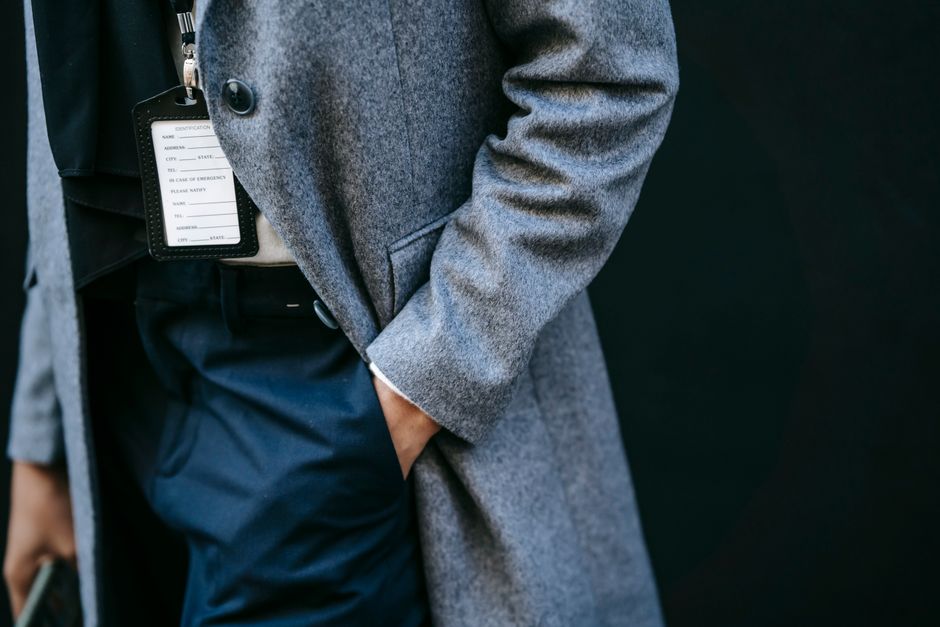
Most men buy a blazer based on color and price, ignoring fabric weight. That’s why you see guys sweating through a wool blazer in a 75-degree office or shivering in a linen jacket when the AC hits 68. Fabric weight is measured in grams per square meter (GSM). For business casual, you need two weights: one for warmer months and one for cooler months.
Warm weather (above 70°F): Look for 200–250 GSM fabrics. Cotton twill, linen-cotton blends, or tropical-weight wool. Brands like Bonobos Unstructured Blazer ($249, 100% cotton, 220 GSM) or J.Crew Ludlow Unstructured ($298, linen-cotton blend) work well. Avoid full-canvas construction — it adds weight and heat.
Cool weather (below 60°F): 300–350 GSM. Worsted wool or wool-polyester blends hold structure without overheating indoors. Suitsupply Havana fit blazers ($399, 300 GSM wool) are a solid choice. They have a soft shoulder and natural drape, so they read as casual even in darker colors.
The mistake: Buying a heavy winter-weight blazer (400+ GSM) for year-round use. You’ll overheat in spring and look overdressed for casual Fridays. Keep one heavy blazer for winter client meetings only.
Three Local Shopping Strategies That Actually Work
Searching for “business casual outfits men nearby” usually returns big-box stores like Macy’s or Nordstrom Rack. Those stores have decent inventory, but the fitting rooms are crowded and the sales staff is often stretched thin. Here are three strategies that get you a better fit faster.
Strategy 1: Visit a Suit Specialist (Even If You Don’t Need a Suit)
Indochino, Suitsupply, and Brooks Brothers have dedicated fitting specialists. Walk in, tell them you want a blazer for business casual. They will measure you in under 5 minutes. Even if you don’t buy from them, you walk out knowing your exact chest size, shoulder width, and sleeve length. That data makes shopping anywhere else 10x faster. Do not rely on the tag size. A 42R from one brand fits like a 44L from another. Use your body measurements, not the label.
Strategy 2: Use the “Three-Jacket Test” at Off-Price Retailers
At Nordstrom Rack, Saks Off Fifth, or Marshalls, grab three jackets in the same size but different brands. Try them on back-to-back. Note which brand’s shoulder seam lands closest to your bone. That brand is your baseline. Buy that jacket, even if the color isn’t perfect. You can always dye it or return it. But you now know your brand fit for future purchases.
Strategy 3: Find a Local Tailor Before You Buy the Jacket
Search Yelp or Google Maps for “tailor near me” and read reviews. Call and ask: “How much to hem sleeves and take in the waist of a blazer?” Expect $30–50 for both. If the tailor says “I don’t do jackets,” cross them off. Find one who specializes in men’s suiting. Then buy a jacket knowing exactly what alterations will cost. That $200 jacket plus $40 in alterations still beats a $400 jacket that fits okay off the rack.
The Three Biggest Mistakes Men Make When Shopping for Business Casual Blazers
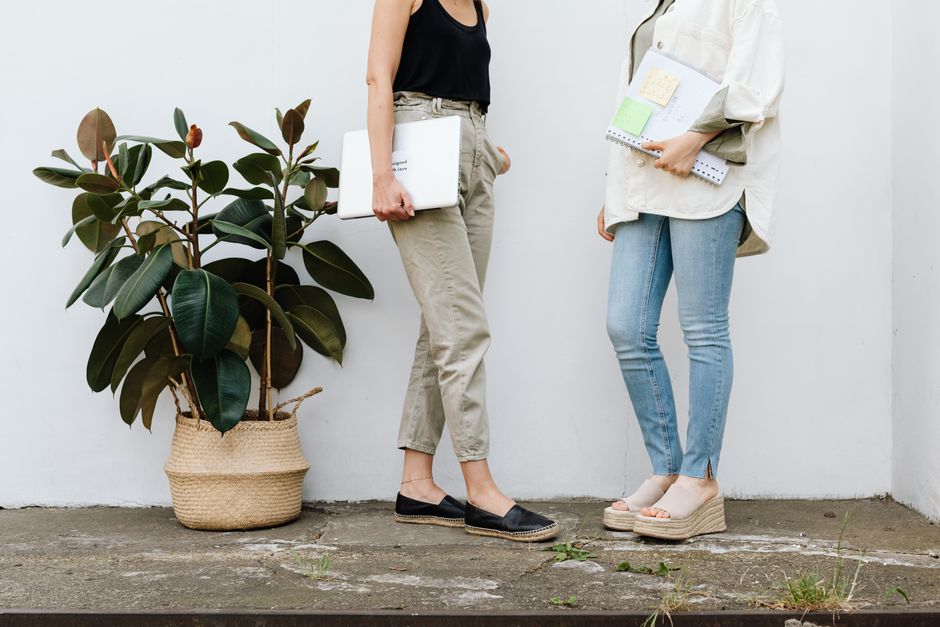
Mistake #1: Buying a suit jacket and wearing it as a blazer. A suit jacket has structured shoulders and a high button stance. It looks stiff and formal when paired with chinos. A true blazer has softer shoulders, patch pockets, and a lower button stance. It’s designed to be worn with non-matching pants. If you already own a suit jacket, don’t try to force it into business casual. It won’t work.
Mistake #2: Ignoring the button stance. The top button of a two-button blazer should sit at or just below your natural waist — the narrowest part of your torso. If the button sits too high, the jacket looks boxy. If it sits too low, the jacket looks long and sloppy. Check this in the mirror. Most off-the-rack blazers have a high button stance to fit a wider range of body types. A tailor can lower the button by about 1 inch, but it costs $60–100.
Mistake #3: Choosing the wrong color for your wardrobe. Navy and charcoal are safe, but they can look too formal if your office skews casual. A medium gray or olive green blazer pairs with more colors and reads as intentional rather than default. Spier & Mackay makes a mid-gray herringbone blazer ($248, 100% wool) that works with navy, khaki, or olive chinos. It’s the most versatile color you can buy.
When a Blazer Is the Wrong Choice (and What to Wear Instead)
Not every business casual situation needs a blazer. If your company has a stated “casual” dress code and no client-facing role, a blazer can make you look like you’re trying too hard. In that case, a structured bomber jacket or a knit blazer works better.
The structured bomber: Alpha Industries MA-1 in navy or olive ($130, nylon shell, quilted lining). It has a clean silhouette, zippered front, and ribbed cuffs. Pair with a button-down or a merino sweater. It reads as intentional but not formal. The knit blazer: Banana Republic Traveler Knit Blazer ($198, 54% cotton, 44% polyester, 2% elastane). It has the shape of a blazer but moves like a cardigan. It’s machine washable and resists wrinkles. Perfect for travel or offices without AC.
The tradeoff: A knit blazer won’t hold its shape as long as a woven wool blazer. Expect 2–3 years of regular wear before the elbows bag out. A structured bomber lasts 5+ years if you don’t abuse it. Choose based on how often you wear it: daily = wool blazer; weekly = knit blazer or bomber.
How to Build a Complete Business Casual Outfit in Under 10 Minutes
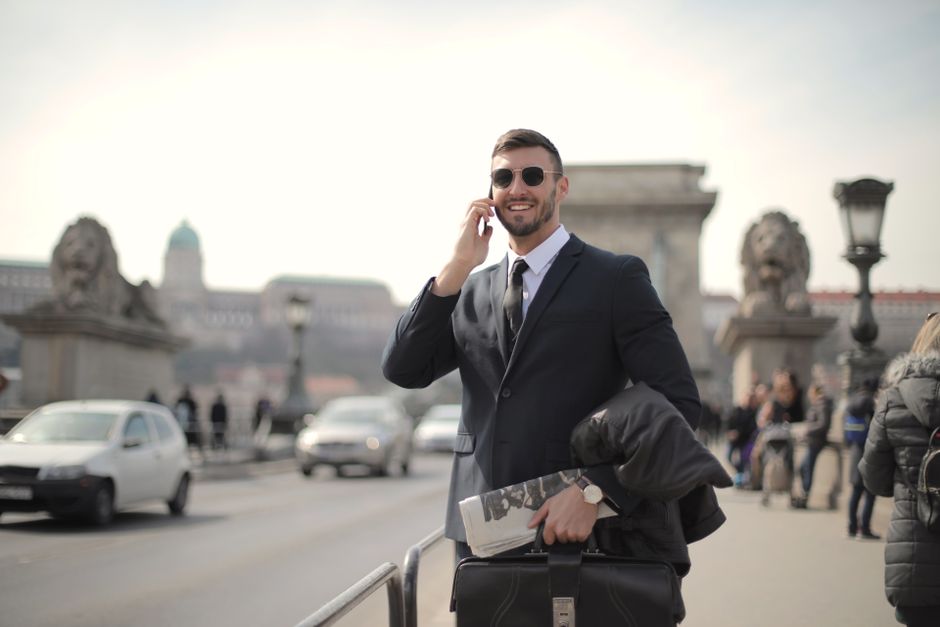
You don’t need a full wardrobe refresh. Three pieces — the blazer, the pants, and the shoes — carry the outfit. Here is the exact combination that works for 90% of business casual situations.
Blazer: Medium gray or olive green, 250–300 GSM wool or cotton. Unstructured shoulders. Patch pockets. Two-button front. Pants: Chinos in khaki, navy, or charcoal. Flat front. No pleats. Slight taper below the knee. Brands like Bonobos ($98, stretch cotton) or Docker’s Alpha ($70, cotton-poly blend) fit well off the rack. Shoes: Brown leather oxfords or dark suede chukka boots. Allen Edmonds Park Avenue ($425) or Clarks Desert Boot ($130). Avoid black shoes with a gray blazer — it creates too much contrast.
The rule of thumb: Two of the three pieces should be neutral. If the blazer is gray and the pants are khaki, the shoes can be brown suede (a slight pop). If all three are neutral — gray blazer, navy pants, black shoes — the outfit looks flat. Add a pocket square in a muted pattern or a watch with a brown leather strap to break it up.
Business casual is not about rules. It’s about knowing which rules to follow and which to bend. The blazer that fits your shoulders, the pants that hit your shoes without pooling, the shoes that complement both — that’s the outfit that makes you look like you belong in the room before you say a word. The rest is just fabric.